IB Spanish: tips and advice.
Practical guidance for students and parents across the IB Spanish subjects: exam technique, study habits and making the most of every lesson.
All topics
All tags
No articles match. Try another word or choose All tags.
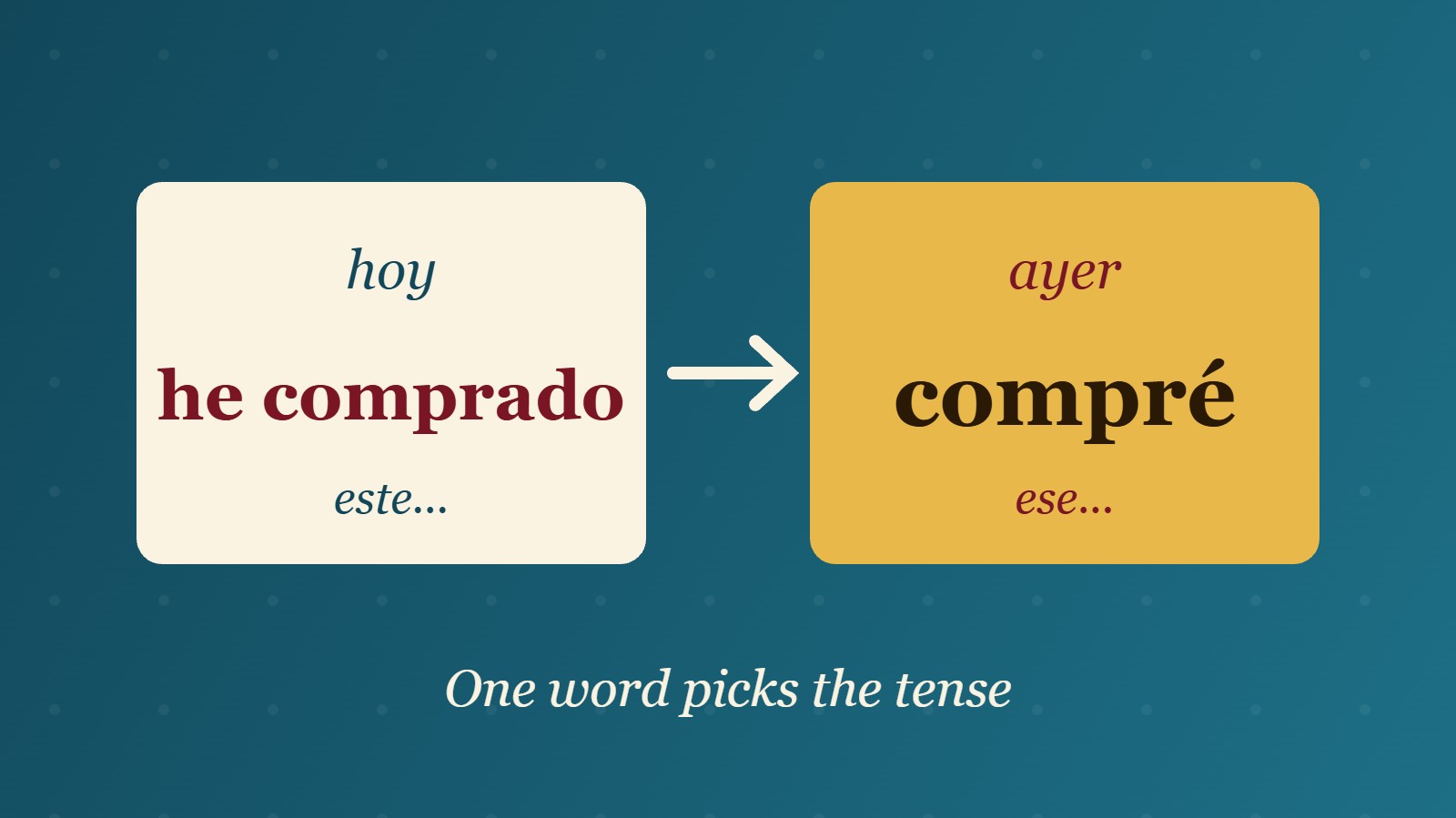
Hoy he comprado, ayer compré: the one-word test that picks your Spanish past tense.
A simple ‘can you add este?’ test for choosing between the perfecto and the indefinido, with three-sentence examples, a regional caution, a ten-minute drill and a tip for parents.
Read the article →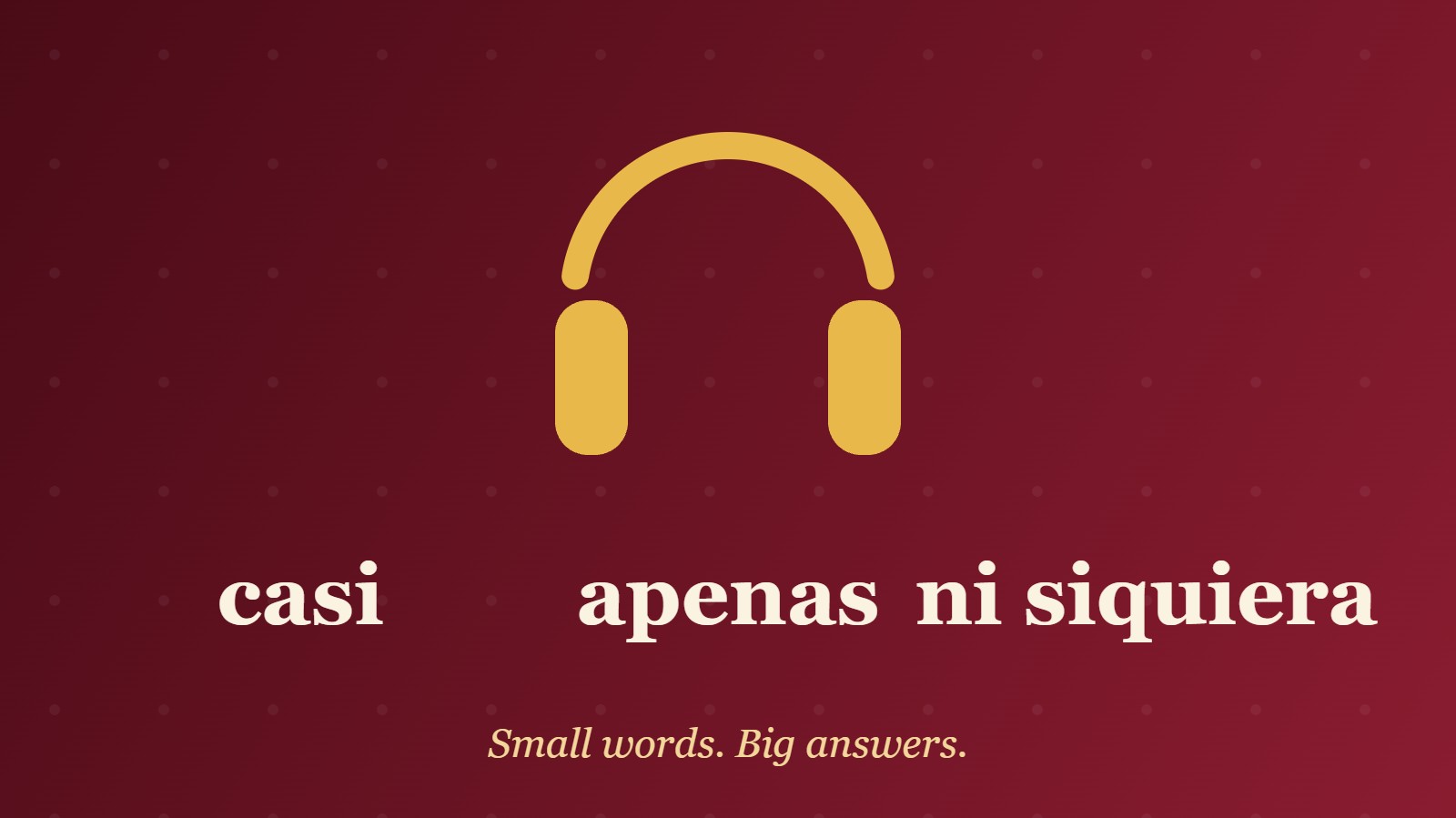
Casi, apenas, ni siquiera: the small Spanish words that flip a listening answer.
Six small Spanish words (casi, apenas, ni siquiera, antes de, aunque, no solo) that change a listening answer, plus a three-pass routine, a no-audio drill and a tip for parents.
Read the article →
“Soy aburrido” and “estoy aburrido” are not the same thing: ten adjectives that change meaning with ser and estar.
Ten Spanish adjectives that change meaning with ser and estar (aburrido, listo, malo, rico and more), with four short activities, an answer key and a check for parents.
Read the article →
Studying alone? Nobody is marking your work. Here is how to fix that.
No teacher marking your work? Five practical ways for self-taught IB Spanish students to build a feedback loop at home, plus a quiet job for parents.
Read the article →
Literature past papers: the questions change, the thinking does not.
How to use IB Spanish Literature past papers: build a question bank, plan with different pairs of works and practise comparing instead of retelling.
Read the article →
Ten past papers or three? Why more is not always more.
Quality over quantity with IB Spanish past papers: a simple mistake log with three columns, a realistic schedule and what to do when the same error keeps coming back.
Read the article →
Past papers: the page most students skip is the one that gives you the marks.
How to use IB Spanish A past papers properly: three rounds of conditions and a four-step review that starts with the mark scheme, not your score.
Read the article →
Why a tutor with fewer students is worth more per hour. Five questions to ask before you pay.
What a tutor’s rate really pays for: preparation, marking and feedback between lessons. Five questions parents can ask any IB Spanish tutor before choosing.
Read the article →
Three things a good practice sheet does that a textbook never will.
Why well-built practice materials matter in IB Spanish: traps, answer keys and speaking tasks. Use this three-point test on any material, including mine.
Read the article →
Why my lessons start with the mark scheme, not the textbook.
How I teach IB Spanish: every lesson starts from the assessment criteria, with feedback against the bands. See what that looks like for the Literature comparative essay.
Read the article →
Six Spanish phrases that sound perfect in English and quietly fail in the exam.
Six common English-to-Spanish literal translations that cost IB students marks, with the natural Spanish and a simple habit to catch them.
Read the article →
Why three minutes a day beats a two-hour Sunday session.
Three minutes of daily retrieval practice beats one long weekly session for learning Spanish verbs. A simple five-day plan for IB students and their parents.
Read the article →
Stuck on a 6? You are probably describing, not analysing.
Why strong IB Spanish students plateau at a 6 in Paper 1 analysis: describing instead of analysing. A simple what, effect, why model to move up.
Read the article →
The Spanish word that quietly costs IB students marks.
One everyday Spanish word keeps IB students from top marks in writing and analysis. Here is how to spot it and replace it in five minutes.
Read the article →
Indefinido or imperfecto? Ask the camera before you write the verb.
Struggling with the pretérito indefinido versus imperfecto in IB Spanish? Use the photo or film question, with examples and a five-minute drill.
Read the article →
“Sí.” “No.” “No sé.” The three most expensive words in the IB Spanish oral.
Short answers like “sí”, “no” and “no sé” cost marks in the IB Spanish oral. Learn the three-step answer that gives the examiner something to reward.
Read the article →
“I understand everything.” So why is the grade a 5?
Why IB Spanish students who understand everything still score a 5 in writing, and what actually closes the gap between understanding and producing Spanish.
Read the article →
Human Ingenuity Sounds Vague. Here Is What IB Spanish B Really Asks You to Say
The theme most students answer with a few vague lines about technology asks one precise question. Here is how to answer it in every task.
Read the article →
How to Choose the Right Text Type in IB Spanish B Paper 1
The text type you choose is the first thing the examiner sees. Here is how to pick it with confidence.
Read the article →
How to Avoid Misunderstandings Between Spanish Learners and Native Speakers
Common sources of confusion in everyday conversation, and how to avoid them.
Read the article →
How to Support Your Child Through the IB Diploma
Practical ways for parents to help without adding pressure.
Read the article →
Your Spanish IB Notebook Is a Hot Mess (But It Doesn’t Have to Be)
A simple system to organise your notes so they work for you at exam time.
Read the article →
Forget Being Smart: Get Your Organization in Check to Dominate the IB
Why organisation beats raw talent in the IB, and where to start.
Read the article →
Individual Oral Exam Tips for IB Spanish
What examiners look for in the Individual Oral and how to prepare.
Read the article →